




CoESS strongly supports EU Action Plan on Drone and C-UAS Security
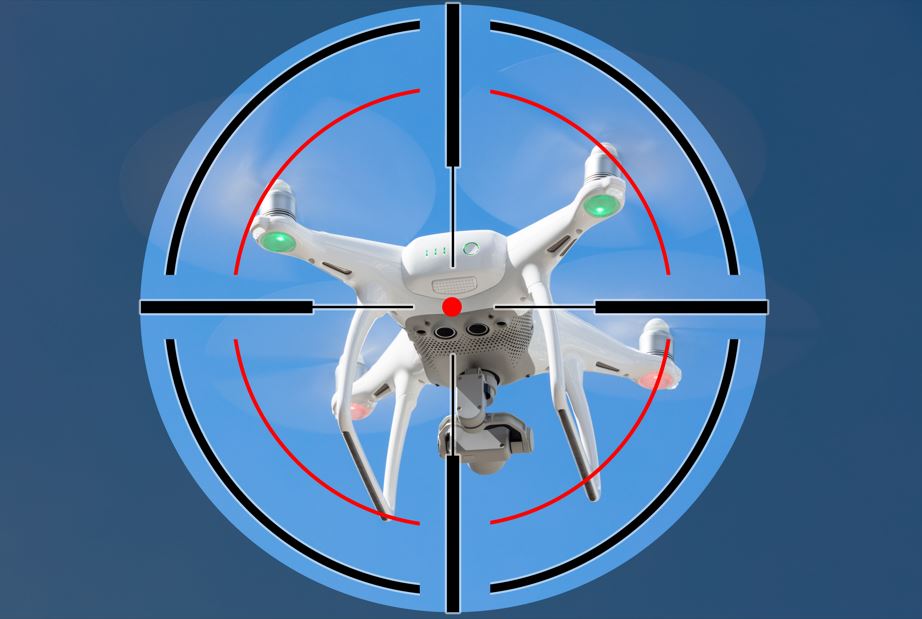
The European Commission has presented its long-awaited Action Plan on Drone and Counter-Drone Security. At a time when drone incidents over airports, energy sites, ports, rail infrastructure and even military facilities are increasing across Europe, this initiative sends a strong political signal: drone and counter-drone policy is now a core part of the EU’s security agenda. For CoESS, this step is both welcome and overdue. For years, we have called for a coherent European response – one that promotes the responsible use of drones in private security while closing the growing legal gaps in counter-UAS (C-UAS).
The Action Plan focuses on strengthening preparedness, improving detection, coordinating responses and reinforcing Europe’s defence readiness. It also addresses two key issues that are central for the private security sector:
- the Commission acknowledges that legitimate drone operations must be facilitated. Regulatory simplification should make it easier for professional operators to deploy drones responsibly. This is essential if drones are to become a standard tool in security services, which 8 years after the adoption of the EU Drone Regulation is still not sufficiently the case due to administrative burden and legal uncertainty.
- the Action Plan recognises the serious fragmentation of national counter-drone frameworks. In many Member States, private operators can detect drones but are not allowed to take mitigation measures - even when sensitive sites are affected. Unclear mandates and legal uncertainty limit effective responses and leave critical infrastructure exposed - a point highlighted by CoESS since years. The Commission now announces further work to clarify roles and responsibilities and to explore, by 2030, a possible EU-level counter-drone framework with common binding and non-binding rules. This would respect Member State competences while bringing more coherence across the Union. In the short term, additional recommendations for law enforcement are foreseen.
For CoESS, this structured European discussion on prevention, detection, verification and - where appropriate - intervention is a breakthrough.
Since the EU Drone Strategy 2.0 in 2022, CoESS has consistently argued that drones can make security services safer and more efficient – for example in the protection of ports, energy facilities, rail networks and other critical infrastructure. However, lengthy authorisation procedures and the absence of suitable Standard Scenarios continue to slow down deployment.
At the same time, the lack of clear national legal frameworks for counter-UAS remains a major concern highlighted by CoESS for years, most recently in a meeting with the European Commission and Member States in December 2025. Security officers are present at thousands of sensitive sites, yet during a drone incident response windows are extremely short and legal powers are often unclear. Without defined mandates, licensing systems, training requirements and liability frameworks, effective and proportionate action is difficult.
The Action Plan openly recognises these challenges. It also proposes stronger civil-military cooperation, certification schemes for counter-drone systems, an “EU Trusted Drone” label, strengthened implementation of U-Space services, and more coordinated procurement and industrial development. These are important steps to strengthen Europe’s technological and operational capacity.
The publication of the Action Plan is an important milestone. But political recognition must now be followed by concrete legal frameworks and practical implementation. CoESS will actively contribute to the upcoming discussions with Member States, the European Parliament and other stakeholders.
The message from our sector is clear: Europe has acknowledged the problem. Now it must deliver workable solutions.